Do Pomeranians Bark a Lot? An Honest Breeder's Answer (2026)
Do Pomeranians bark a lot? Honest breeder answer — yes they're alert barkers, but it's manageable. What sets them off, how socialization fixes 80% of it, and what to expect.
Reviewed by the Platinum Pups of Miami breeding team — 10+ years specializing exclusively in Teacup & Micro Teacup Pomeranians.
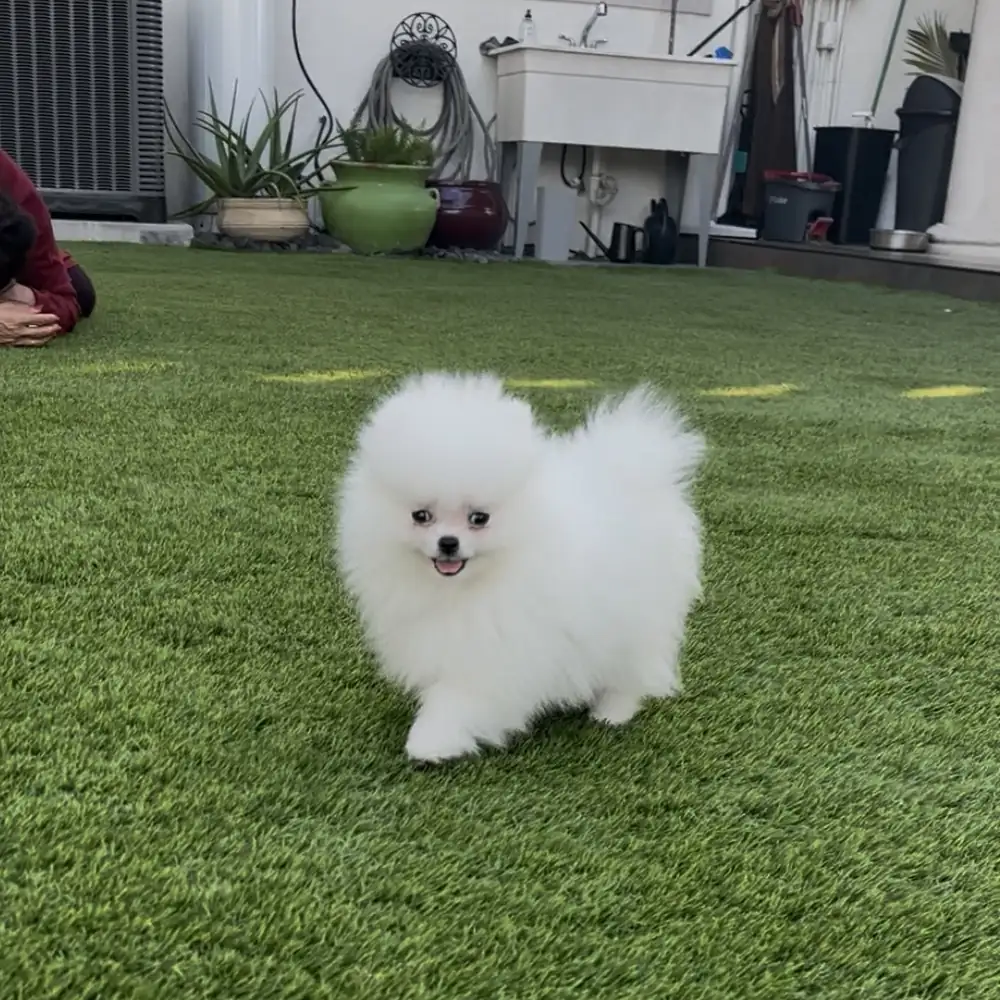
Our Pomeranian Puppies Available Today
Real photos of our current litter — health guaranteed, KKF-registered (Korea Kennel Federation), nationwide delivery.
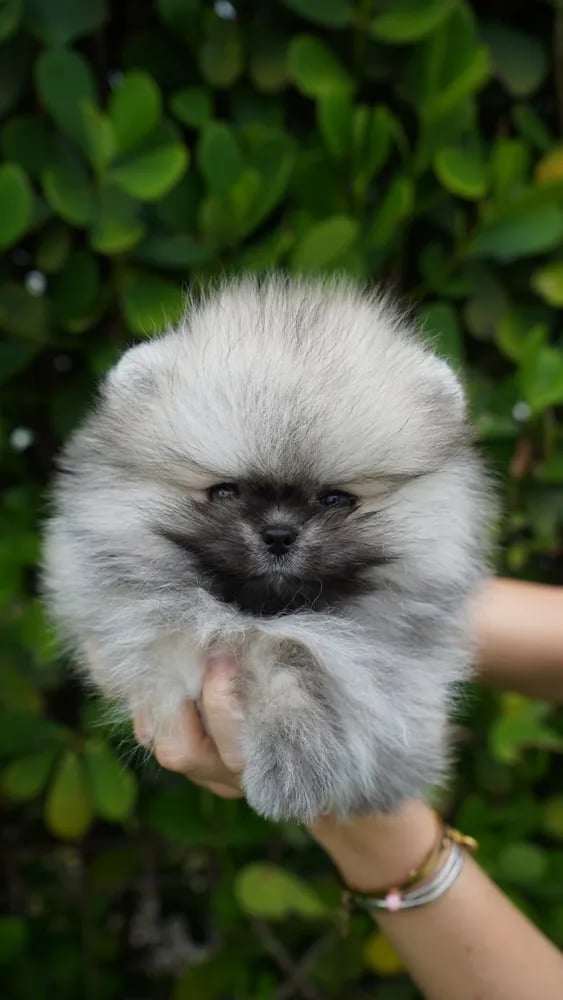
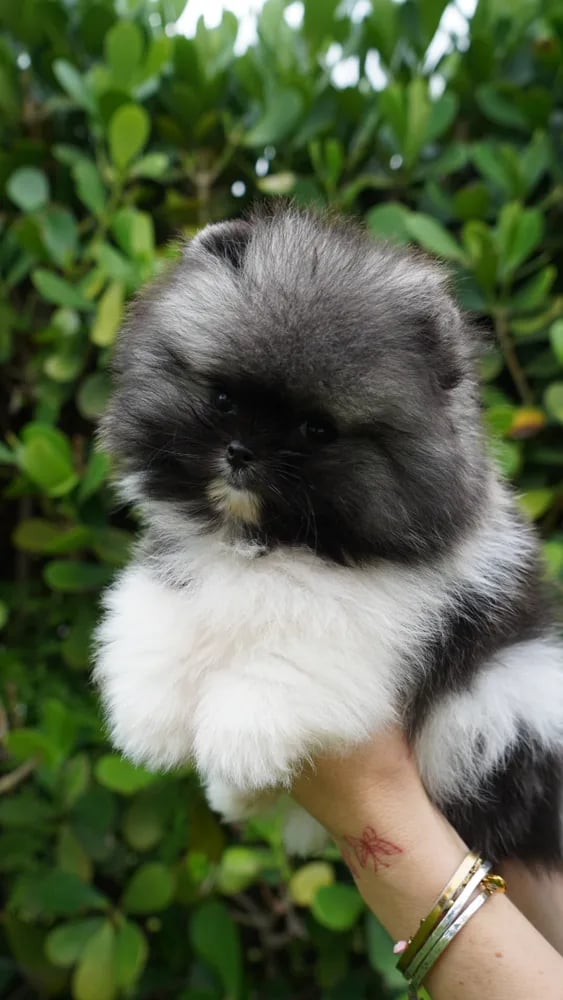
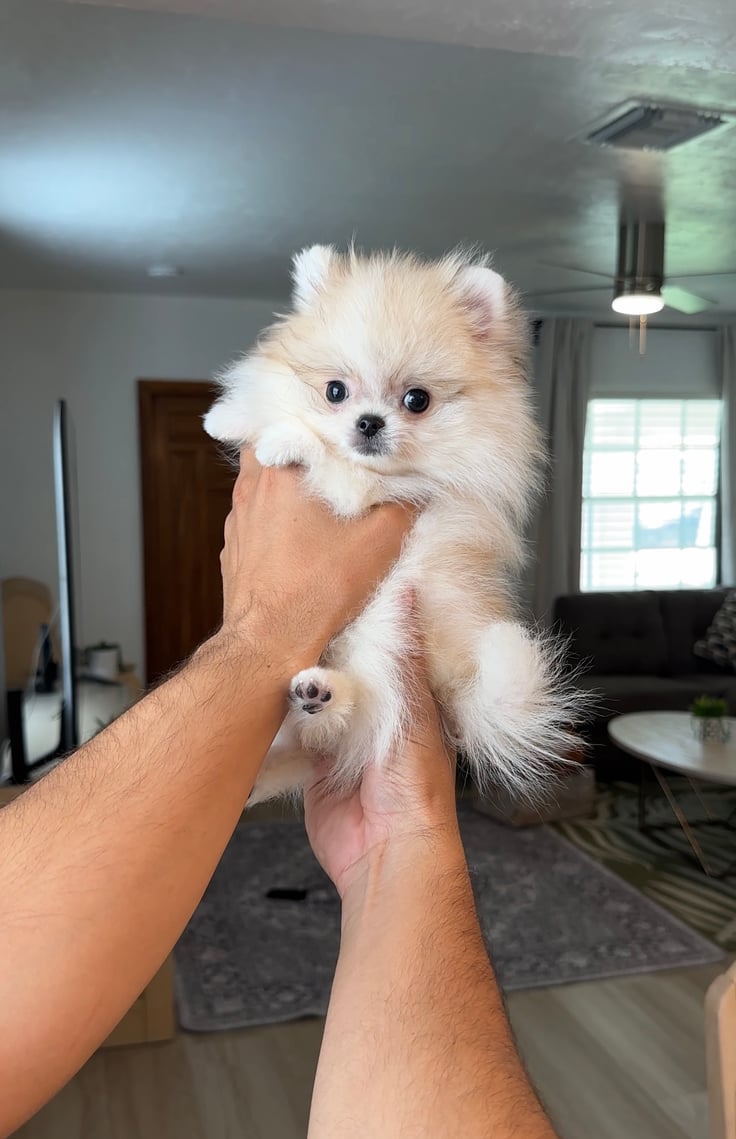
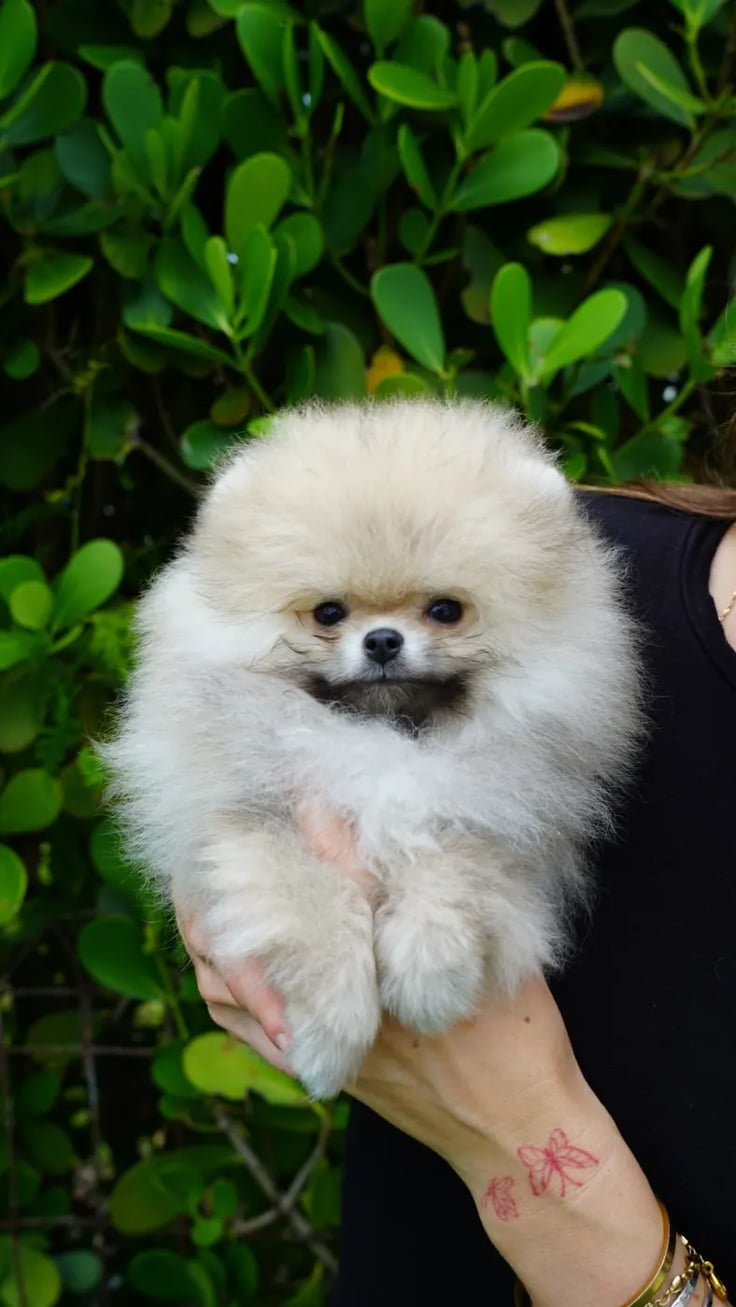


Short answer: yes, Pomeranians bark — but probably less than you've been led to believe, and what they bark at is highly trainable. They're alert dogs by nature, so they'll let you know when someone's at the door, a squirrel's in the yard, or a delivery truck just pulled up. With proper socialization, that's where it ends. A well-raised Pom is not a non-stop yapper.
Written by the Platinum Pups of Miami breeding team — 10+ years raising teacup and micro teacup Pomeranians. Below: why Poms bark, what triggers them, what makes barking worse, and how to set up a calm dog from day one.
Looking for a Calm Pomeranian Puppy?
Temperament starts with breeding and early handling. See our currently available Pomeranian puppies →
Do Pomeranians Bark a Lot?
Pomeranians are moderate barkers. They're not silent — but they're also not the relentless yappers their reputation suggests. They were originally bred as alert watchdogs, so barking at unusual sounds is in their wiring. The amount and intensity of that barking comes down to three things:
- Genetics & lineage — some lines are noticeably quieter
- Early socialization — what they were exposed to between 4–10 weeks
- How you respond when they bark as an adult
What Pomeranians Typically Bark At
| Trigger | How Often | Trainable? |
|---|---|---|
| Doorbell / knock at door | Most Poms | Highly — quiet command works well |
| Strangers approaching the home | Most Poms | Highly — with socialization |
| Other dogs outside | Common | Moderate — depends on exposure |
| Squirrels, birds, wildlife | Common | Low — instinct is strong |
| Separation / being alone | Varies | Highly — with crate & routine training |
| Random ambient sounds | Poorly socialized Poms | Highly — desensitization works |
Why Some Pomeranians Bark a Lot
If you've met a Pomeranian that barks non-stop, almost always one of these is the reason:
1. Poor Early Socialization
The 4–10 week window is when puppies form their template for what's "normal" and "scary." A pup raised in a quiet, isolated environment grows up barking at everything because the world feels unfamiliar. Our pups are raised inside our home with constant noise, handling, kids, and household activity — they grow up confident, not reactive.
2. The Owner Rewards Barking Without Realizing It
Pom barks → owner picks them up to comfort them → Pom learns barking gets attention. Repeat for 6 months and you've trained a barker. The fix: never reinforce nuisance barking with attention, treats, or eye contact.
3. Boredom and Under-Stimulation
Pomeranians are smart and social. A Pom left alone for 10 hours a day with no toys, no walks, and no mental work will bark from boredom. Daily walks, training sessions, and rotating puzzle toys solve this almost completely.
4. Anxiety or Separation Distress
An anxious Pom barks at everything. Crate training from day one, a predictable routine, and gradual alone-time exposure builds a calm dog.
How to Stop a Pomeranian From Barking Too Much
- Don't respond. Ignore nuisance barking completely. No eye contact, no talking, no picking up.
- Teach "quiet" early. When the bark stops, even for 2 seconds, say "quiet" and reward. Repeat hundreds of times.
- Socialize aggressively in the first year. Expose your Pom to new people, dogs, sounds, surfaces, and environments weekly.
- Manage triggers. If your Pom barks at the front window, close the blinds. If they bark at the doorbell, disconnect it during training and use knocks instead.
- Drain energy daily. A 20–30 minute walk + 10 minutes of training works wonders.
- Use a crate. A crate-trained Pom is a calmer Pom, full stop.
Are Teacup Pomeranians Quieter or Louder?
Size has zero effect on barking. Temperament does. A well-bred, well-socialized teacup is just as calm as a well-bred standard. A poorly socialized standard is just as yappy as a poorly socialized teacup. We notice many of our Korean-bloodline pups are naturally quieter than typical American lines — but that's lineage, not size.
Are Pomeranians Good for Apartments?
Yes — surprisingly so. They're small, don't need huge spaces, and adapt well to indoor living. The barking question matters more in apartments, which is why early socialization and quiet training matter even more for apartment buyers. A properly raised Pom is a great apartment dog.
Pomeranian Barking FAQ
Do Pomeranians bark a lot?
They're moderate alert barkers. With proper socialization and training they're not non-stop yappers. Genetics, early socialization, and owner response determine how much they actually bark as adults.
Are Pomeranians yappy?
Poorly bred or poorly socialized Poms can be. Well-bred, well-raised ones are confident and alert without being annoying.
How do I stop my Pomeranian from barking?
Ignore nuisance barking, teach a "quiet" command, manage triggers (windows, doorbell), socialize widely in the first year, and drain energy daily with walks and training.
Do teacup Pomeranians bark more than standard?
No — size has no effect. Lineage and socialization determine barking.
Are Pomeranians good for apartments?
Yes. They're small and adapt well to indoor living. Apartment owners just need to prioritize early socialization and quiet training.
At what age do Pomeranians start barking?
Around 8–12 weeks. Training the response from day one is far easier than retraining a 1-year-old habit.
Authoritative Sources
Looking for a Confident, Calm Pomeranian?
Our pups are raised in our home with constant handling, household noise, and early socialization — which is why they grow up confident and not reactive. Browse available Pomeranian puppies → or text (786) 337-5699.
Our Pomeranian Puppies Available Today
Real photos of our current litter — health guaranteed, KKF-registered (Korea Kennel Federation), nationwide delivery.