Do Pomeranians Shed? A Breeder's Honest Guide (2026)
Yes, Pomeranians shed — but less than you'd think. A Miami breeder's honest guide to Pom shedding, the puppy uglies, blowing coat, grooming routine, and how to keep your home fur-free.
Reviewed by the Platinum Pups of Miami breeding team — 10+ years specializing exclusively in Teacup & Micro Teacup Pomeranians.
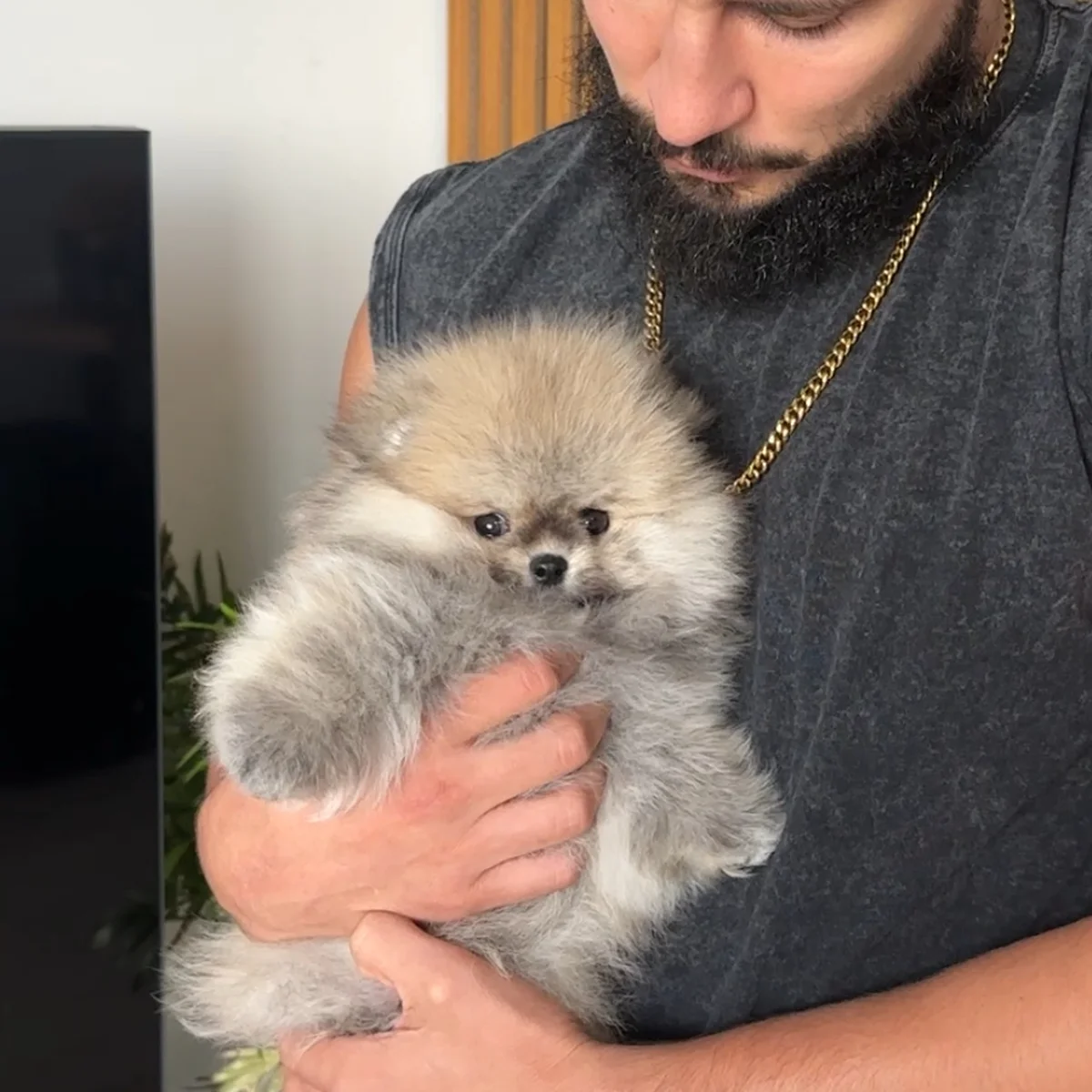
Our Pomeranian Puppies Available Today
Real photos of our current litter — health guaranteed, KKF-registered (Korea Kennel Federation), nationwide delivery.
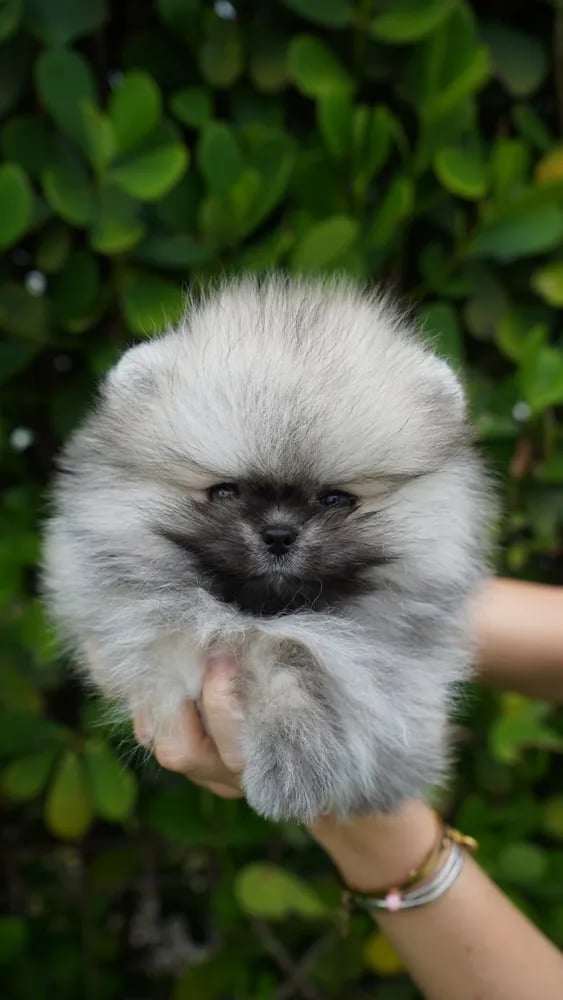
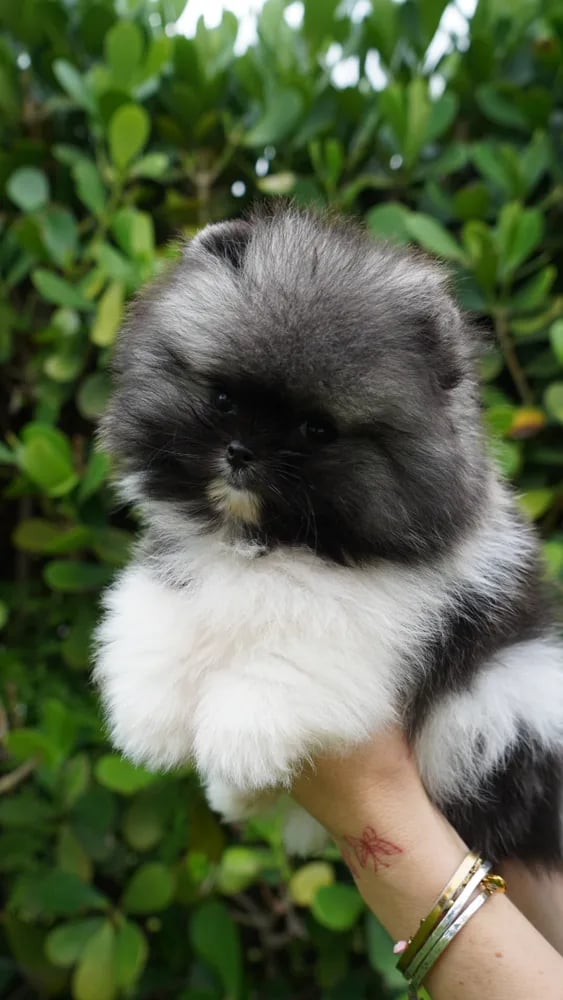
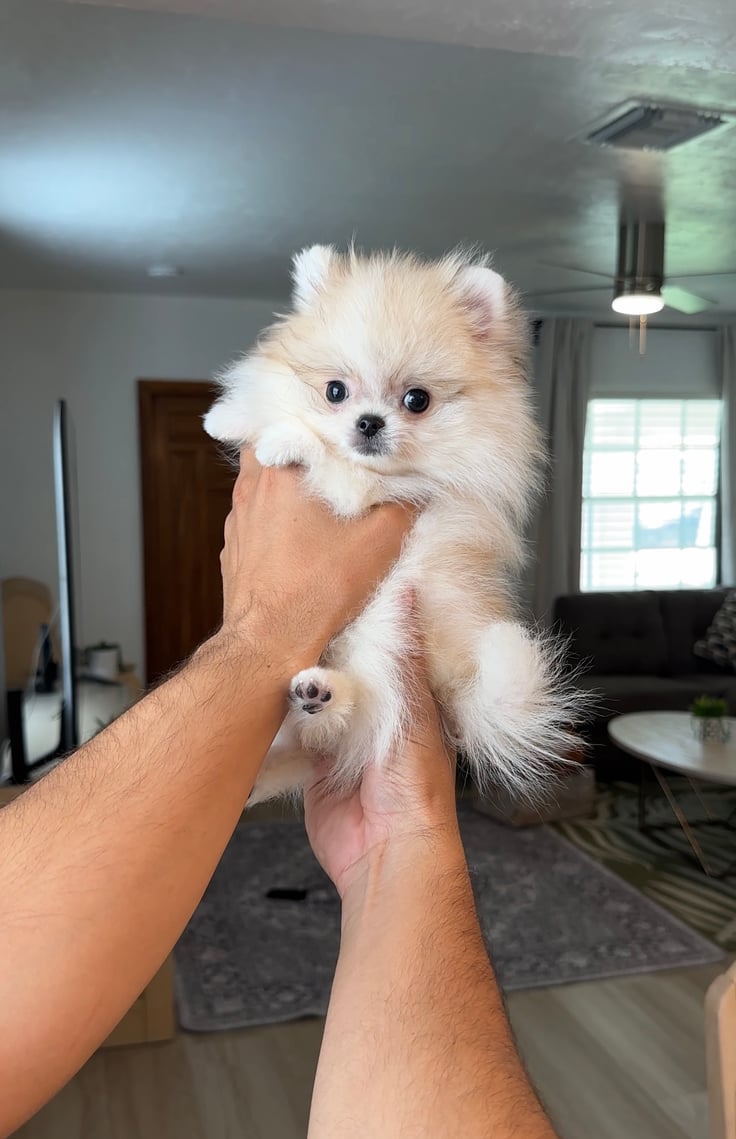
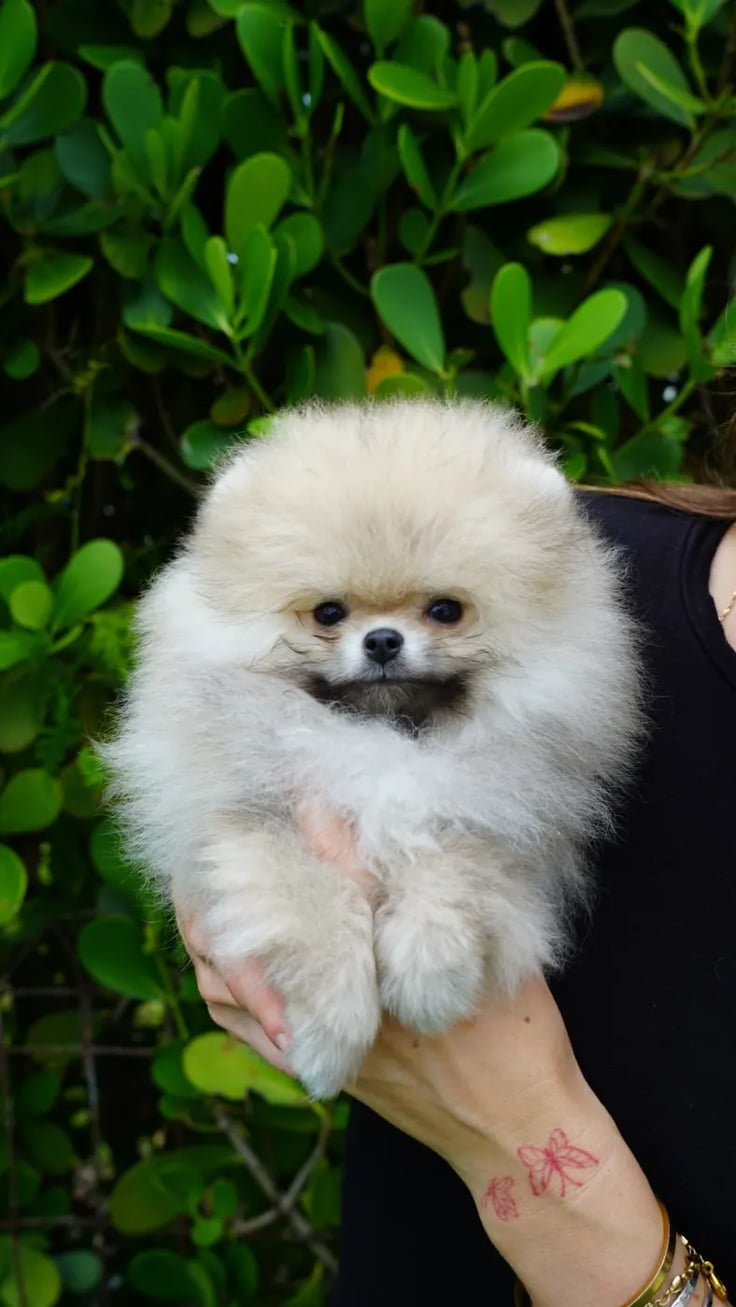


Short answer: yes, Pomeranians shed — but probably less than you're picturing. They're a double-coated breed with year-round light shedding and two bigger seasonal "coat blows" each year. With a 15-minute weekly routine, most owners barely notice fur around the house.
This is an honest, breeder-written guide. We've raised teacup and micro teacup Pomeranians at Platinum Pups of Miami for 10+ years, so everything below comes from daily hands-on experience — not blog filler. We'll cover how much Poms actually shed, the "puppy uglies" stage that scares new owners, seasonal blowing coat, the grooming routine that works, and whether mini and teacup Poms shed less.
Do Pomeranians Shed a Lot?
Pomeranians are moderate shedders. They're not low-shed like a Poodle or Bichon, but they shed dramatically less than a Husky, Lab, or German Shepherd. Most of the year you'll see a small amount of fur on dark clothing and a thin layer on the dog bed — manageable with a weekly brush.
What surprises new owners is the type of fur. Pomeranians have a double coat: a soft, dense undercoat and a longer, coarser outer coat. When they shed, it's mostly the fine undercoat that comes out — light, fluffy, and easy to vacuum. It doesn't stick to fabric the way short Lab hair does.
How Much Shedding Should You Expect?
| Season | Shedding Level | What You'll See |
|---|---|---|
| Most of the year | Light | A small amount on clothes; thin fur layer on bedding |
| Spring (coat blow) | Heavy, 2–4 weeks | Visible undercoat tufts, daily brushing needed |
| Fall (coat blow) | Moderate, 2–3 weeks | Less dramatic than spring, lighter daily brushing |
| Puppy uglies (4–10 months) | Heavy & alarming | Puppy coat falls out before adult coat grows in |
The "Puppy Uglies" — Why Your Pomeranian Suddenly Looks Bald
If you have a Pomeranian puppy between 4 and 10 months old and they look patchy, scruffy, or half-bald — relax, this is normal. It's called the "puppy uglies," and every single Pomeranian goes through it.
Here's what's happening: your puppy is shedding their soft puppy coat to make room for the thick adult double coat. The adult coat grows in unevenly — usually the back and rump first, the head and chest last. For about 6–8 weeks they can look like a different breed entirely.
By 10–14 months, the full adult coat is in and your Pom looks like the fluffy ball of floof you bought them to be. We send every new owner a photo guide so they know exactly what to expect month by month — no panic calls at the 5-month mark.
Blowing Coat — The Seasonal Shed
Twice a year, healthy Pomeranians "blow coat" — they release a large portion of the undercoat in 2–4 weeks. Spring is the bigger blow (preparing for summer); fall is lighter (transitioning to winter coat).
Signs your Pom is blowing coat:
- Tufts of undercoat lifting away from the body when you brush
- More fur than usual on bedding, sofas, and clothing
- The coat looking slightly thinner or less puffy for a few weeks
- A line of new coat coming in along the back
What to do: brush daily during the blow with a pin brush followed by an undercoat rake. A single 10-minute session catches almost all the loose fur before it lands on your couch. Skip the brush, and you'll be vacuuming for a month.
The Grooming Routine That Actually Works
This is the exact routine we recommend to every Platinum Pups family. It takes 15 minutes a week most weeks, and 10 minutes a day during the two annual coat blows.
Weekly (15 minutes)
- Pin brush through the full coat, going with the grain
- Slicker brush over the same areas to lift loose undercoat
- Comb behind the ears, under the legs, and around the rear — the four spots that mat first
Every 4–6 weeks
- Bath with a quality dog shampoo (not human shampoo — wrong pH)
- Blow dry on low heat while brushing — this is when most undercoat releases
- Nail trim, sanitary trim, light overall tidy
During a coat blow (daily, ~10 min)
- Pin brush + undercoat rake
- Quick slicker pass to finish
What not to do: never shave a Pomeranian to "stop the shedding." Shaving a double coat can permanently damage the regrowth (a condition called post-clipping alopecia) and removes the natural insulation that keeps them cool in summer and warm in winter. Trim, don't shave.
Do Mini and Teacup Pomeranians Shed Less?
This is the second-most-common question we get (after "are they hypoallergenic" — short answer: no, and here's why).
The honest answer: yes, but only because there's less dog. A 2.5 lb micro teacup Pomeranian has about a third of the surface area of a 7 lb standard Pom, so the absolute volume of shed fur is much smaller. Per square inch of coat, they shed the same amount.
For apartment dwellers and people who simply don't want fur on everything, a teacup or micro teacup Pom is noticeably easier to manage than a standard. You'll still see fur — just a lot less of it.
What Affects How Much Your Pomeranian Sheds?
Shedding isn't fixed — several factors push it up or down:
- Diet quality — a high-protein, omega-rich diet supports a healthier coat that sheds less. Cheap kibble = dull coat and excess shedding.
- Stress — moves, new pets, schedule changes can trigger short-term excess shedding
- Indoor vs outdoor light — dogs kept indoors under artificial light often shed lightly year-round instead of two big seasonal blows
- Hormones — intact females shed heavily after heat cycles; spaying levels this out
- Health issues — thyroid problems, skin infections, or parasites cause abnormal shedding (see a vet if it seems excessive)
- Bath frequency — over-bathing strips coat oils and can increase shedding; once every 4–6 weeks is the sweet spot
When Pomeranian Shedding Is a Red Flag
Most shedding is normal. These signs warrant a vet visit:
- Bald patches with visible pink skin (not the puppy uglies pattern)
- Itching, redness, or scabs alongside the shedding
- Hair coming out in clumps when lightly pulled
- Thinning that doesn't follow the seasonal pattern
- Symmetrical hair loss on both sides of the body (possible thyroid)
- Dull, brittle coat with excessive shedding (often diet or thyroid)
The most common culprits we see are thyroid imbalance, food sensitivities, and a condition called Black Skin Disease (Alopecia X) that affects some Pomeranian lines. Reputable breeders screen for it. If you're shopping for a Pom, ask whether the parents have been health-tested.
Living With a Shedding Pomeranian — Practical Tips
- Lint roller by every door — solves 80% of the "fur on clothes" problem
- Washable couch covers or throws on favorite Pom napping spots
- Robot vacuum on a daily schedule during coat blows
- A rubber pet brush for clearing fur off fabric furniture — works better than a vacuum attachment
- Keep brushing tools by the couch so the weekly groom happens during TV time, not as a chore
Pomeranian Shedding vs Other Small Breeds
| Breed | Shedding Level | Coat Type |
|---|---|---|
| Poodle / Toy Poodle | Very low | Single coat, hair |
| Maltese | Very low | Single coat, hair |
| Bichon Frise | Low | Double coat, curly |
| Yorkshire Terrier | Low | Single coat, hair |
| Pomeranian | Moderate | Double coat, fur |
| Shih Tzu | Low–moderate | Double coat, hair |
| Chihuahua (long coat) | Moderate | Double coat, fur |
| Husky (for context) | Very heavy | Double coat, fur |
FAQs About Pomeranian Shedding
Do Pomeranians shed all year?
Yes, lightly. Healthy Poms shed a small amount continuously, with two heavier "coat blow" periods in spring and fall lasting 2–4 weeks each.
Why is my Pomeranian shedding so much suddenly?
Most likely a seasonal coat blow, the puppy uglies (if 4–10 months old), or post-heat hormonal shedding in intact females. If none of those fit and you see bald patches or skin irritation, see a vet — thyroid issues and food sensitivities are common causes.
Do Pomeranians shed more than Yorkies?
Yes, slightly. Yorkies have a single coat of hair (like human hair) so they shed less. Pomeranians have a double coat of fur, which means more visible shedding but a fluffier, more insulating coat.
Can you stop a Pomeranian from shedding?
No — shedding is a healthy biological process. But you can reduce visible shedding by 70–80% with weekly brushing, monthly bathing with proper blow-drying, and a high-quality diet rich in omega fatty acids.
Do teacup Pomeranians shed less than standard Pomeranians?
Yes, in absolute volume — there's simply less dog, so less total fur. The shedding rate per square inch of coat is the same.
Should I shave my Pomeranian to reduce shedding?
No. Never. Shaving a double-coated breed like a Pomeranian can cause permanent coat damage (post-clipping alopecia) and removes natural temperature regulation. Trim, brush, and bathe — never shave.
Ready to Bring Home a Pomeranian?
Now that you know what to expect from shedding, browse our current available Pomeranian puppies, see our teacup Pomeranians, or check the 2026 Pomeranian price guide if you're still comparing your options.
Allergy concerns too? Read our companion guide: Are Pomeranians Hypoallergenic? The Honest Answer.
Our Pomeranian Puppies Available Today
Real photos of our current litter — health guaranteed, KKF-registered (Korea Kennel Federation), nationwide delivery.