Are Black Pomeranians Rare? Colors, Price & Care Guide (2026)
A breeder's honest 2026 guide to black Pomeranians — solid black, black & tan, black & white, plus coat genetics, price ranges, and what to expect as they grow.
Reviewed by the Platinum Pups of Miami breeding team — 10+ years specializing exclusively in Teacup & Micro Teacup Pomeranians.
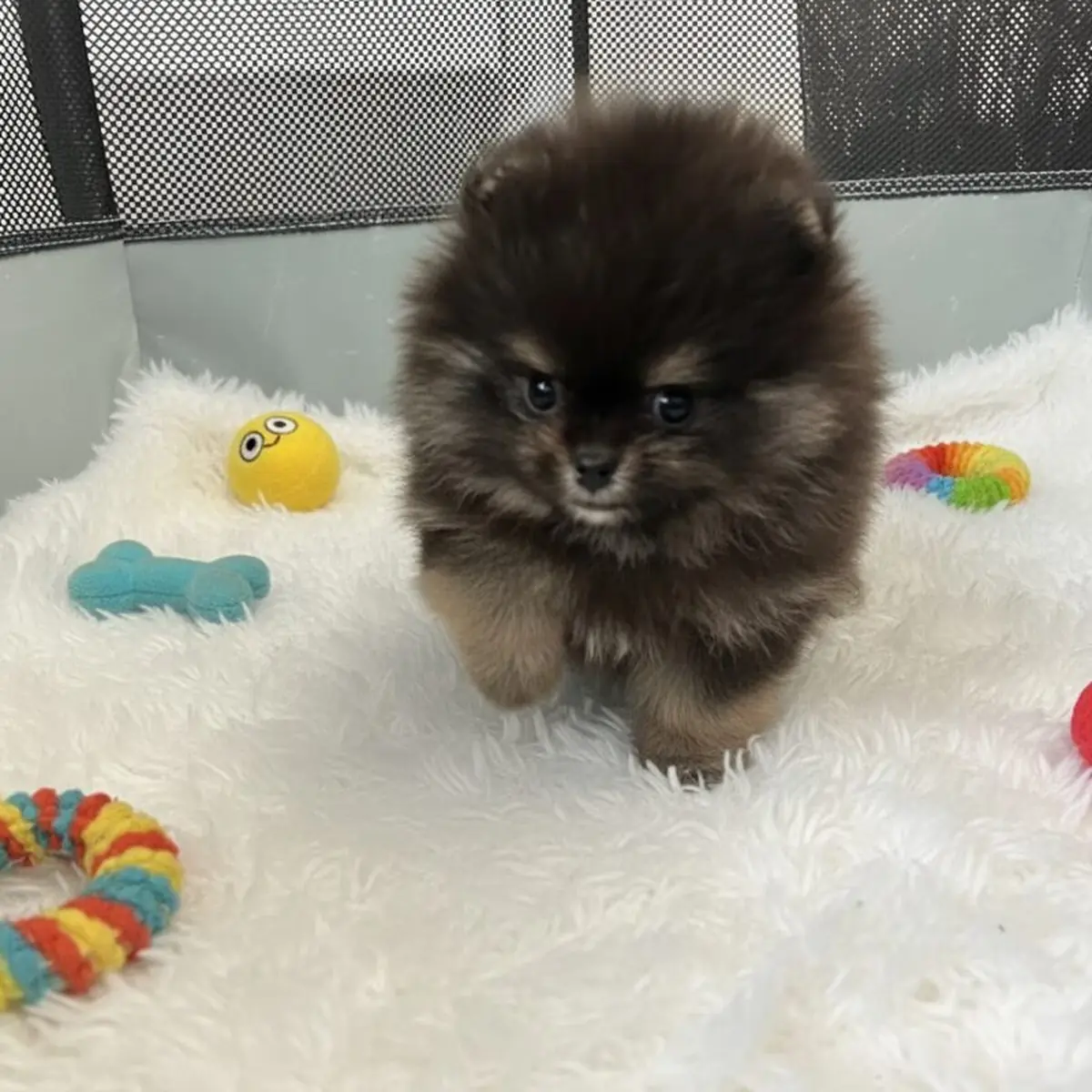
Our Pomeranian Puppies Available Today
Real photos of our current litter — health guaranteed, KKF-registered (Korea Kennel Federation), nationwide delivery.
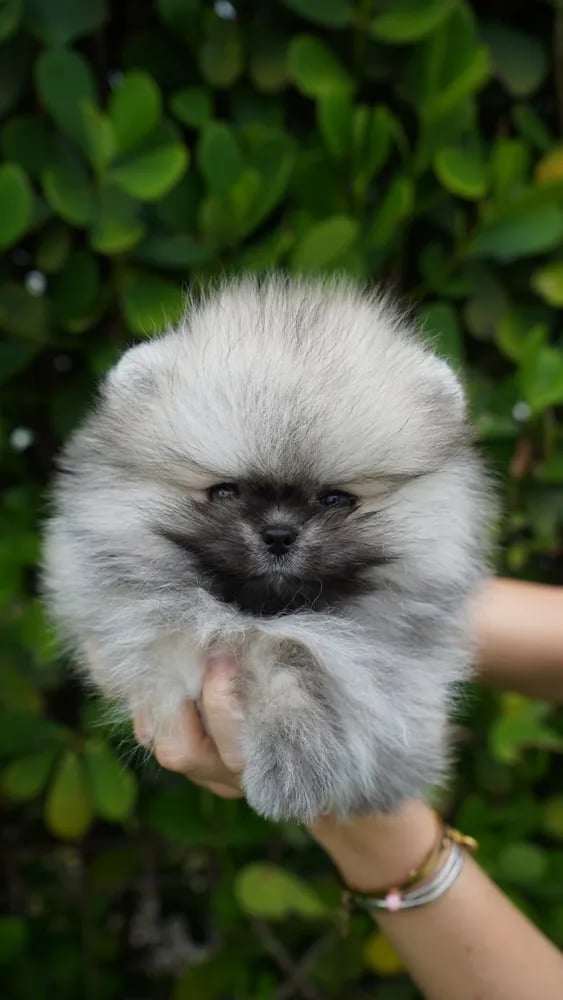
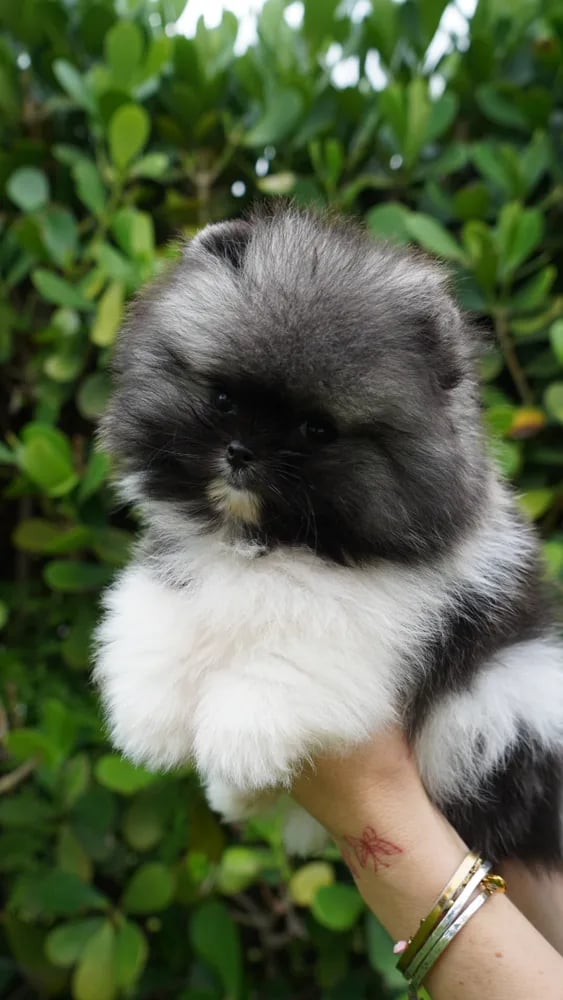

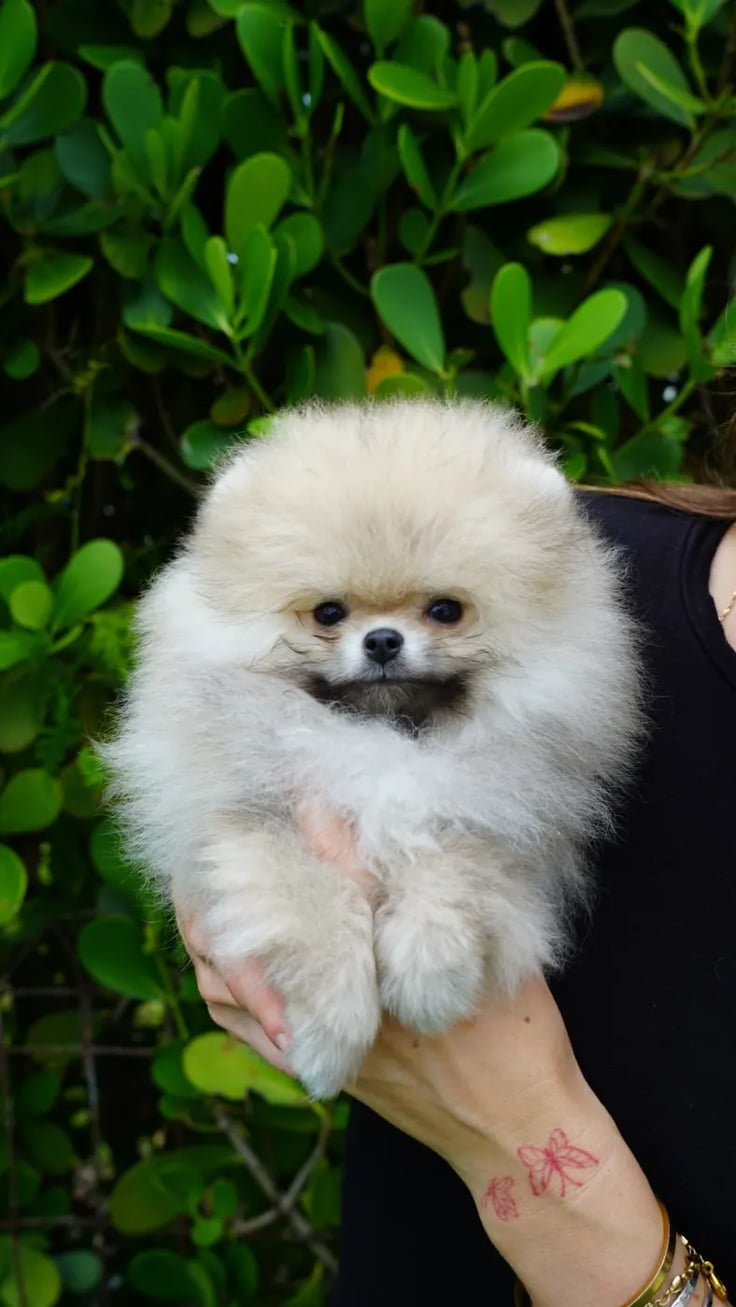


Short answer: yes, a true solid-black Pomeranian is one of the rarer colors in the breed — and black & tan, black & white, and black & brown variations are even less common when bred to a high standard. Most "black" Poms you see online are actually dark sable or charcoal that lightens with age.
This guide is written by the Platinum Pups of Miami breeding team — 10+ years raising teacup and micro teacup Pomeranians, including Korean-bloodline black lines. Below: how rare black Poms really are, the genetics behind the coat, the difference between solid black and black & tan, what they cost in 2026, and how to spot a Pom that will actually stay black.
Available Black Pomeranian Puppies Right Now
Before the deep dive — if you're here because you want one, we currently have black & tan micro teacup pups available. See our available black Pomeranian puppies →
Are Black Pomeranians Rare?
Solid jet-black Pomeranians are rare. Orange and orange sable dominate the breed — somewhere around 60–70% of registered Poms fall into that family. Cream, white, and sable make up most of the rest. True black — the kind where the coat stays a deep dark color into adulthood with no fading to charcoal — sits in the bottom 10–15% of color frequency, and high-quality breeder-bred blacks are even rarer.
What confuses buyers: a lot of "black" Pomeranian puppies are born dark and lighten dramatically. Sables, in particular, are often jet-black as newborns and shift to gold or orange by 6 months. A real solid black Pom comes from two parents who carry the recessive black gene — and you need a breeder who actually tracks lineage to produce them reliably.
How Rare Is Each Black Variation?
| Color | Rarity | What It Looks Like |
|---|---|---|
| Solid Black | Rare | Deep jet-black coat with no white, tan, or sable markings. Eyes, nose, and paw pads are all black. |
| Black & Tan | Rare | Black body with tan points above the eyes, on the muzzle, chest, and legs. Strikingly elegant. |
| Black & White (Parti) | Uncommon | Black with defined white markings — chest, paws, blaze. Considered a parti-color. |
| Black & Brown (Chocolate) | Very rare | True chocolate Poms are one of the rarest colors. Liver-pigmented nose instead of black. |
| Dark Sable (often mislabeled "black") | Common | Born dark, lightens to gold/orange by 6 months. Most "black puppy" listings are this. |
The Genetics: Why Black Poms Are Uncommon
Black is a recessive trait in Pomeranians. To produce a solid black puppy, both parents need to carry the black allele — and even then, only a portion of the litter expresses it. Most breeders unintentionally select for the dominant orange/sable colors because that's what most buyers ask for, which keeps the black gene pool small.
Korean-bloodline Pomeranians (which we work with at Platinum Pups) tend to carry stronger black genetics than typical American lines. That's why you'll see more solid blacks, black & tans, and the rare ash/cool-toned coats coming out of Korean breeding programs. It's not magic — it's just decades of intentional color selection.
Do Black Pomeranians Stay Black?
Solid black Poms stay black their whole lives. You may see slight charcoal undertones as the undercoat grows in, but the topcoat remains a deep dark color. Black & tan Poms also hold their pattern — the tan points may deepen or lighten slightly with age, but the contrast stays.
The exception is dark sable puppies marketed as black. These almost always lighten to gold, red, or orange between 4 and 10 months as the adult coat comes in. If a breeder shows you a 6-week-old "black" pup but can't show you photos of the parents in jet-black adult coats, you're likely looking at a sable.
How to Tell a Real Black Pomeranian Puppy
- Check the pigment. A true black Pom has a fully black nose, black lips, black eye rims, and black paw pads — even as a young puppy. Pink or liver pigment around the nose or eyes means the pup is not solid black.
- Look at the parents. Both parents should be photographed in adult coat. If only the mother is black and the father is sable, expect the puppies to lighten.
- Ask about the lineage. A reputable breeder knows whether their black line is stable Korean stock, an American black line, or a one-off color outlier.
- Inspect the undercoat. Part the fur — the undercoat on a true black Pom is dark gray to black. A sable's undercoat is cream or white close to the skin.
Black Pomeranian Price in 2026
Black Pomeranian pricing reflects the rarity. Here's what we see across the U.S. luxury Pomeranian market:
| Type | 2026 Price Range | Notes |
|---|---|---|
| Standard black Pomeranian (8–10 lbs adult) | $2,500 – $4,500 | Pet quality, full-size adult. |
| Black Teacup Pomeranian (4–6 lbs adult) | $4,000 – $6,000 | Smaller size, harder to produce reliably in solid black. |
| Black Micro Teacup (under 4 lbs adult) | $5,500 – $8,500 | The combination of micro size + rare color is the top of the market. |
| Black & Tan / Black & White (any size) | +10–20% premium | The tri-pattern is even less common than solid black. |
Platinum Pups black Pomeranians typically run $4,500–$6,500, depending on size, lineage, and how rare the color combination is. Every puppy comes with a written health guarantee, Florida-issued health certificate, microchip, vaccinations to date, and nationwide flight-nanny delivery available. For the full price breakdown across all colors, see our 2026 Pomeranian price guide.
Black Pomeranian Personality & Care
Coat color has zero effect on personality — that's an old myth. A black Pom is no more aggressive, shy, or stubborn than an orange one. What does influence temperament is breeding line, early socialization, and how the puppy is raised in its first 8–10 weeks. Our black pups are raised in our home with constant handling, which is why they come out confident and people-oriented.
Care-wise, black Poms are the same as any other Pomeranian: weekly brushing, two seasonal coat blows per year, and standard small-breed dental and joint care. One small note — a black coat shows dust, dandruff, and any fading more obviously than an orange coat, so a quality brush and the right shampoo matter more for keeping the deep black looking deep black. For the full grooming breakdown, see our honest shedding guide.
Are Black Pomeranians Good Family Dogs?
Yes — they're affectionate, intelligent, and bond hard with their people. Like all Poms, they do best in homes with older kids (8+) or adults, simply because they're tiny and can be hurt by accidental rough handling. They're alert and will let you know when someone's at the door, but with proper socialization they're not yappy.
If you want a small, portable, deeply loyal companion with a coat that turns heads on every walk, a black Pomeranian is hard to beat.
Black Pomeranian FAQ
Are black Pomeranians rare?
Yes. Solid jet-black with no markings sits in the bottom 10–15% of Pomeranian colors. Black & tan, black & white, and black & brown variations are even less common.
Do black Pomeranians stay black?
True solid blacks stay black. Dark sable puppies sold as "black" almost always lighten to gold or orange by 6 months — check both parents' adult photos before buying.
How much does a black Pomeranian cost?
Standard size: $2,500–$4,500. Teacup: $4,000–$6,000. Micro teacup: $5,500–$8,500. Black & tan or black & white patterns add a 10–20% premium because they're rarer.
What's the difference between black and dark sable?
Solid black stays dark for life with black pigment everywhere — nose, lips, paw pads, undercoat. Sable starts dark and lightens; check the undercoat (cream on a sable, dark on a true black) and parent photos.
Are black Pomeranians good for first-time owners?
Yes. They're affectionate, intelligent, and easy to bond with. Care is identical to any other Pom — weekly brushing, standard small-breed routine.
Do you have black Pomeranian puppies available?
Yes — we usually have black & tan micro teacup Pomeranian puppies in our lineup. See our currently available black Poms →
Authoritative Sources
- American Kennel Club — Pomeranian breed standard
- AKC — Pomeranian colors and patterns
- American Veterinary Medical Association
Ready to Bring Home a Black Pomeranian?
If you want a real solid black, black & tan, or rare-pattern Pom — from a breeder who can show you both parents, the lineage, and what the puppy will actually look like as an adult — we'd love to talk. Browse our available black Pomeranian puppies → or text us at (786) 337-5699 to set up a FaceTime with the pup that catches your eye.
Our Pomeranian Puppies Available Today
Real photos of our current litter — health guaranteed, KKF-registered (Korea Kennel Federation), nationwide delivery.